October 21, 2026
A septic backup is one of the most stressful problems a homeowner can face. Wastewater coming up through a floor drain, a toilet that will not stop rising, or a strong sewage smell spreading through the house all call for quick action. What you do in the first few minutes can limit the damage to your home and keep your family safe.
At Curry Septic and Sewer, our family-operated team has responded to emergency septic backups across Hoschton and Northeast Georgia for over 25 years. Here is what to do if it happens in your home, and how to lower the chances it happens again.
Every flush, shower, load of laundry, and running faucet sends more water into a system that cannot handle it. As soon as you notice a backup, stop using water throughout the house.
Make sure everyone in the home knows not to:
Cutting off the flow of water is the single most important thing you can do to keep the backup from getting worse.

Sewage contains bacteria and pathogens that can make people and animals sick. Keep children and pets away from the affected area, both inside the home and in the yard.
If you need to be near the backup:

When a drain backs up, the first instinct is often to reach for a plunger or a bottle of chemical drain cleaner. During a septic backup, neither is likely to help.
Chemical drain cleaners can harm the beneficial bacteria your septic tank relies on to break down waste, and they will not fix a full tank, a blocked outlet, or a saturated drain field. Forcing a clog deeper can also make the problem harder to diagnose.

A septic backup is an emergency that needs professional attention. Call a septic contractor who offers true around-the-clock service.
When you call, it helps to share:
Curry Septic and Sewer answers the phone 24/7, every day of the year. When you call after hours, you reach a real person who can dispatch our crew.

Once the immediate problem is under control, the next step is finding out why it happened. Common causes include:
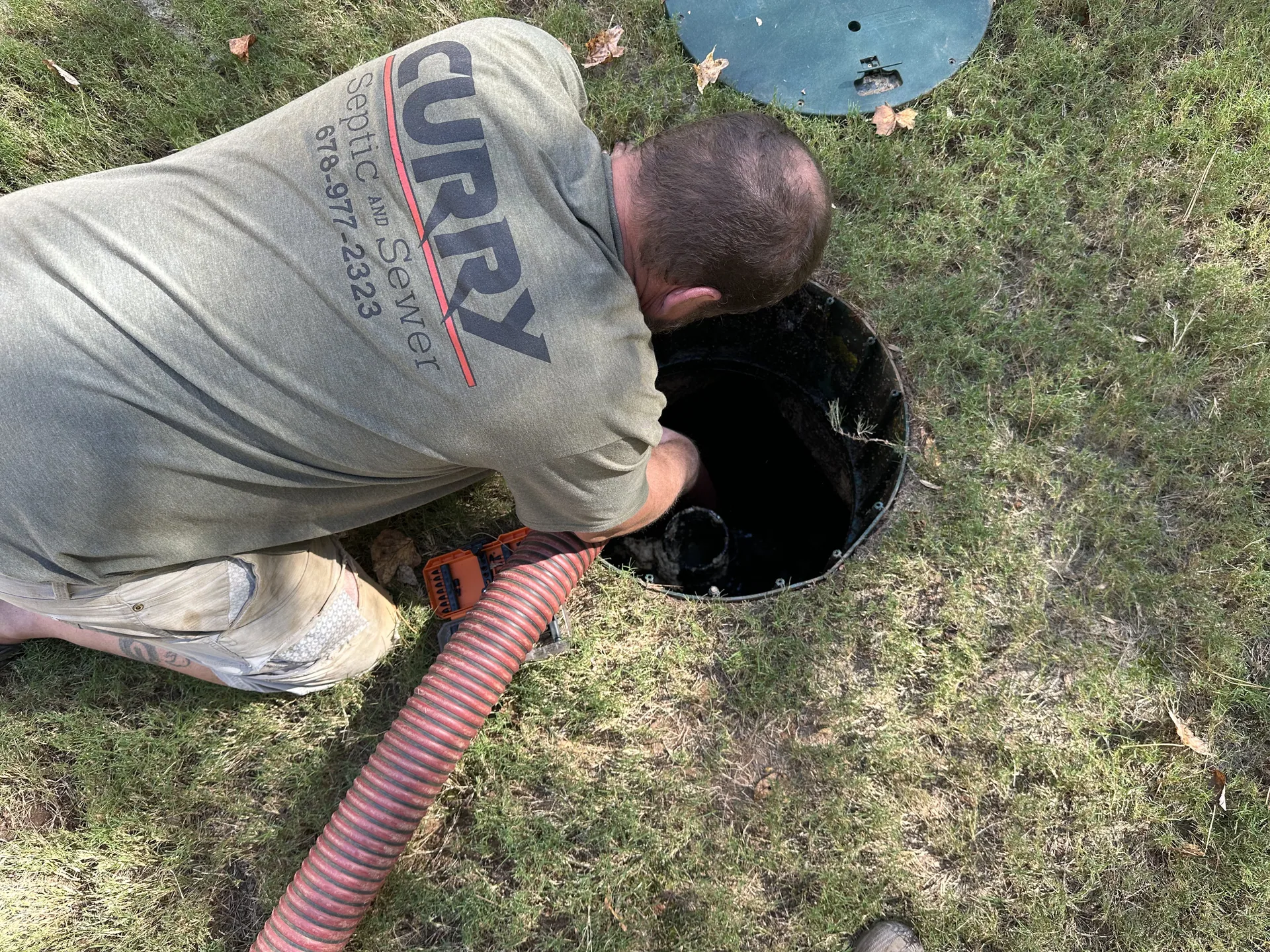
When solids build up past the tank's capacity, wastewater has nowhere to go. Most residential septic tanks should be pumped every three to five years, and larger households may need more frequent service.
Grease, wipes, and other materials that do not break down can block the inlet or outlet of the tank or the lines leading to it.
Heavy rain, excess water use, or a damaged drain field can keep wastewater from draining out of the tank properly.
Roots can grow into septic and sewer lines through small cracks or joints and block the flow of wastewater.
Homes with pump-assisted systems rely on working pumps and alarms. A failed pump or an ignored alarm can quickly lead to a backup.

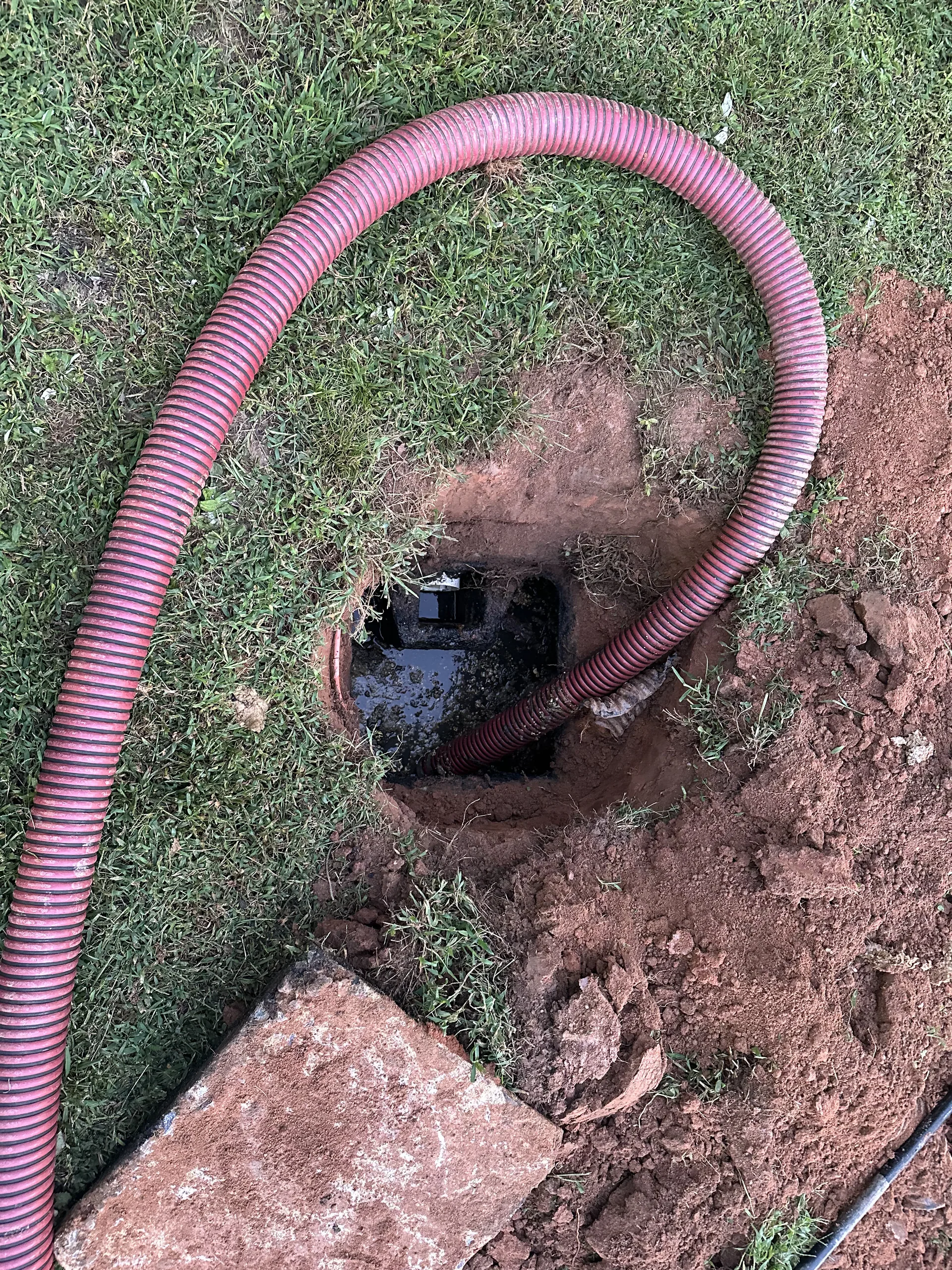
Most septic backups can be prevented with routine care and good household habits.
A professional septic inspection can also catch small problems, like a worn baffle or rising sludge levels, before they turn into an emergency.

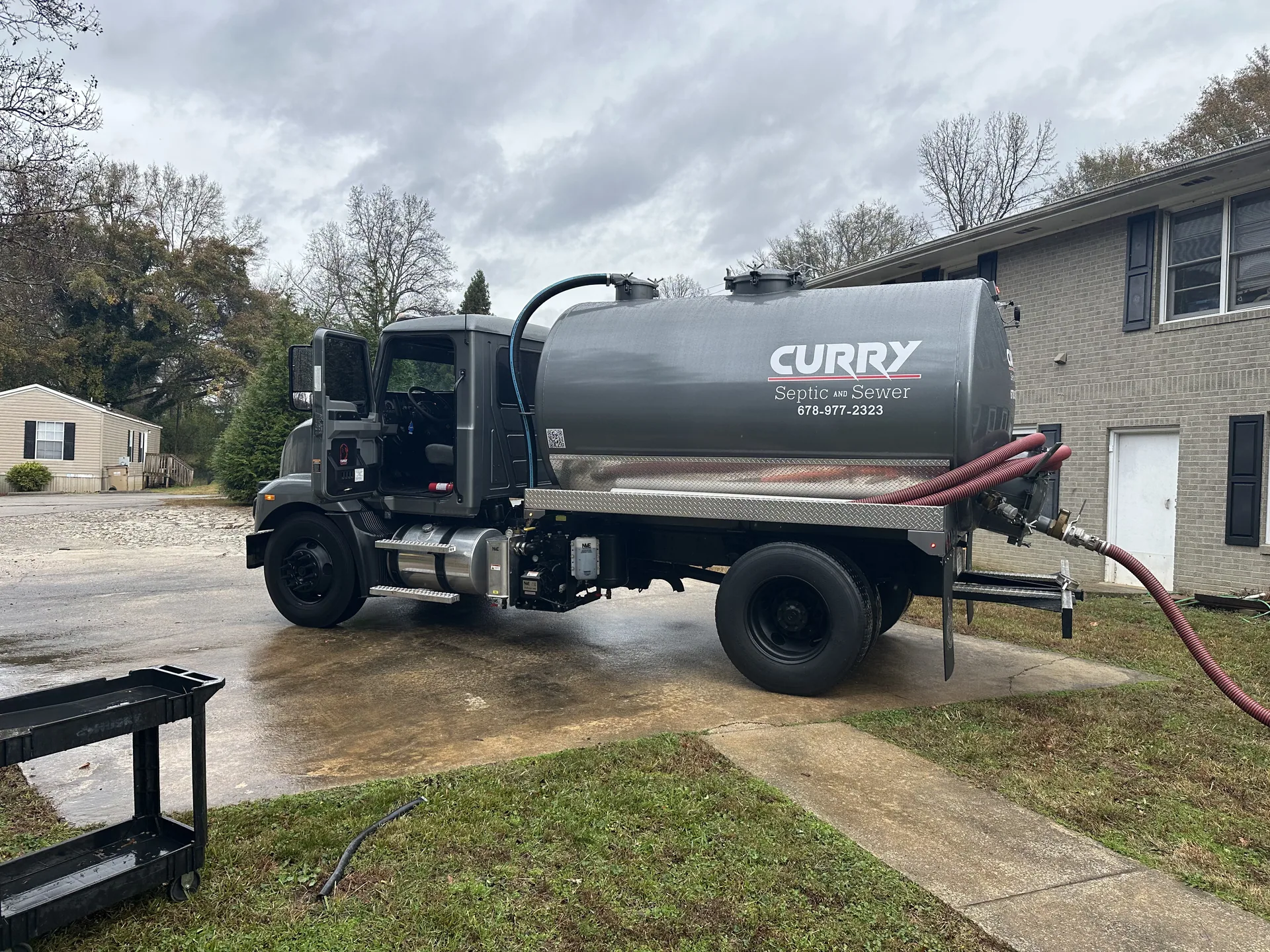
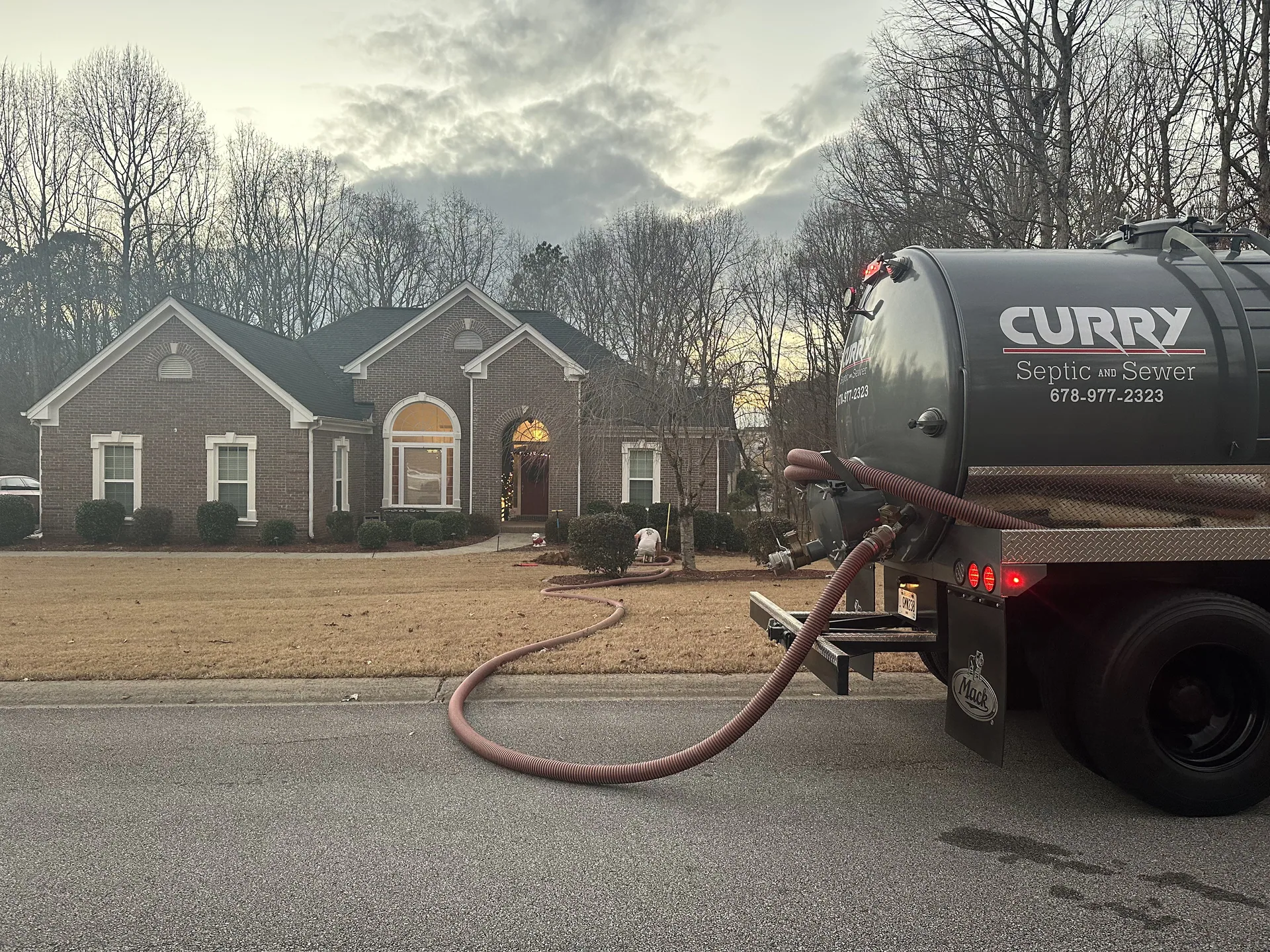
A septic backup can happen at midnight, on a weekend, or on a holiday. When it does, you need a crew that shows up with the trucks, tools, and equipment to diagnose the problem on the spot and get your home back to normal.
Curry Septic and Sewer provides emergency septic repair and pumping, sewer line repair, hydro jetting, and emergency plumbing services throughout Hoschton and Northeast Georgia. Honest pricing, skilled work, and no runaround. Call our 24/7 emergency line at (678) 977-2323. Don't worry, call Curry.